Engineering
The Twin-Cam Cult: Why One Engine Still Matters
The Lotus–Ford twin-cam was never the most powerful engine of its era. Sixty years on, it remains one of the most instructive — a lesson in doing the obvious thing exceptionally well.
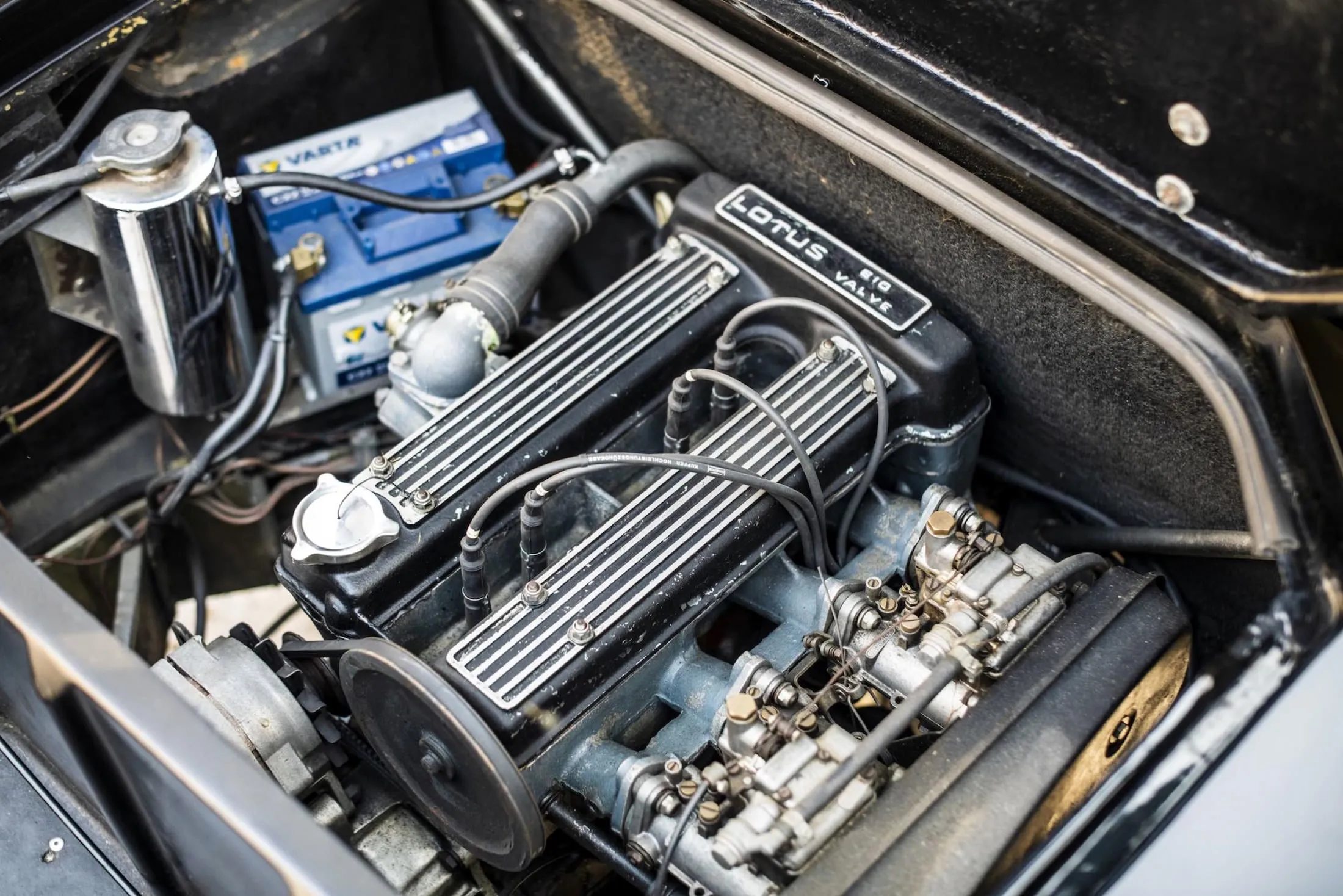
There is a particular sound a healthy twin-cam makes between three and five thousand revs — a hard, even tearing note, free of the lumpiness that afflicts lesser engines asked to do clever things. It is the sound of an engine that was designed once, carefully, and then largely left alone for a decade. That restraint is the whole story.
A block borrowed, a head reimagined
The genius of the Lotus–Ford unit was that most of it already existed. Harry Mundy took the unremarkable Ford “Kent” bottom end — cheap, plentiful, and over-built for its original duties — and crowned it with a new aluminium cylinder head carrying two chains-driven overhead camshafts. The expensive, failure-prone part of any performance engine is the valvetrain; the cheap, durable part is the block. Mundy spent money exactly where it bought breathing and saved it everywhere else.

The best engineering decision is often deciding what not to redesign.
That is a sentence worth keeping near the workbench. A clean-sheet engine is a romantic idea and a budgetary catastrophe. The twin-cam reached production because three-quarters of it was already paid for.
The numbers that mattered
Power figures from this period should be read with suspicion — they were measured generously and quoted optimistically — but the relationships hold up.
| Spec | Lotus–Ford Twin-Cam |
|---|---|
| Displacement | 1,558 cc |
| Valvetrain | DOHC, 2 valves/cyl |
| Compression | 9.5:1 |
| Output (early) | ~105 bhp @ 6,000 rpm |
| Carburation | Twin Weber 40 DCOE |
What those numbers understate is tractability. A well-set-up twin-cam pulls cleanly from low in the range and keeps pulling — a consequence of a sensible cam profile rather than a peaky one. Engineers of the period understood something the spec sheet hides: an engine you can actually use is faster across real roads than an engine that only sings at the top.
What it teaches
- Leverage what exists. Novelty is expensive; integration is cheap.
- Spend on the failure points. Money in the valvetrain, not the badge.
- Usability is performance. Area under the torque curve beats a single peak.
Sixty years later, the twin-cam still turns up in club racing, in restored Elans, in the back of workshops where someone is patiently shimming valve clearances by hand. It endures not because it was exotic, but precisely because it wasn’t.