Opinion
The Poor Mans Lotus is Still A Lotus
Many people say to get into the Lotus ethos cheaply, buy an MX5 Miata but looking inside the brand first might be the way to go
The Lotus philosophy is legendary, many people’s first thought when the word Lotus is uttered is Chapmans decree:
“Simplify, then add lightness”
The first manifestation of this immediately springing to mind is the classic-in-the-making series 1 Elise. These seem to have found their spot at the £20k mark but for a discount you can get the Lotus engineered Vauxhall VX220 for close to half that. If that is still a stretch financially, many people turn to the ever present answer, the Mazda MX-5. These can be readily had for the £3000 mark if you are fine with a decent NC, possibly an NB and I have to say on the surface it ticks all the boxes. Its light, the steering is excellent, its not too much power and even the styling is Lotus-y (A picture of an NA and an Elan make this very obvious). However, the box it doesn’t tick is crucial and that is the badge on the front.
The true poor mans lotus
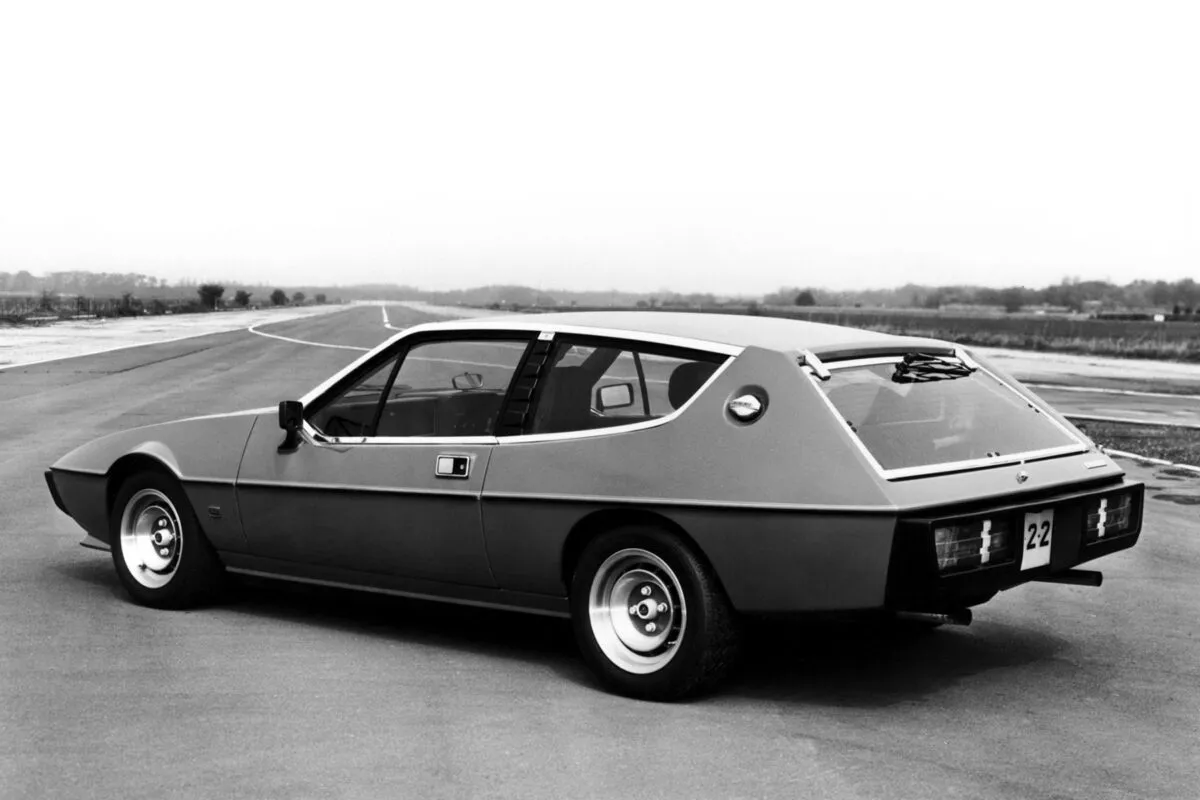
The first Lotus to wear the moniker “Elite” was a beautifully rounded and sculpted car in 1957 showed at the Earls court motor show. This is not the car I’m talking about, instead it’s the heavier, wedge-shaped younger brother, the 1974 type 75 Elite. Once holding the record as the most expensive 4 cylinder car on sale in the UK, thankfully it has depreciated quite a lot into the realm of the average working man. However, your expensive Lotus in this era was a hunk of fiberglass wrapped around a spine chassis probably with BL parts here and there. In period, the journos seemed to enjoy the car quite a lot. The suspension is by all means weird, the front being located transversally by the anti-rollbar and the rear suspension deploying the unholy combination of being inboard and drums, a mechanics worst nightmare. By modern standards it’s mechanically a bit dated, however with 155hp (later 160hp) claimed by the ever optimistic engineers over at Hethel and circa 1100kgs to push around it makes an interesting and convincing older alternative to the MX-5.
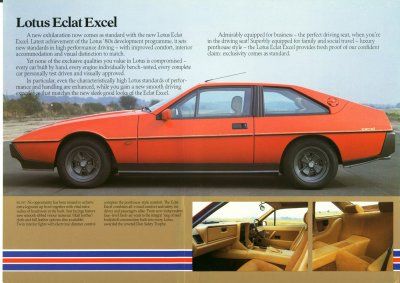
Desinged by Oliver Winterbottom, you get a 2+2 layout shooting brake with a rather odd vertically divided boot separated by glass above the rear passengers heads. However this wasn’t satisfactory to the US market who demanded a different shape and a year later a longer, sleeker fastback was born in the form of the Éclat. Both shared the shame chassis, unfortunately one of its weak points as they came un-galvanised until a point in 1980 when they came out with the Type 83 Elite and the Éclat Excel, later revised to just Excel. The pre-1980 cars are cheaper, a ratty driving one can be occasionally had for the £5-6k mark. You are strongly advised to ensure those inboard rear drum brakes are in tip-top condition as if they arent, you should be prepared for a hefty bill to take the rear subframe off to gain access to them.
The engine, and what it could have been
If you ask many owners, there is a suspiciously large amount of room present in the engine bay. If you ask a subset of those owners, some will have shoved in a Rover V8 with little fuss in the way of room. This is all down to the planned V8 based off of the Type 907 4-cyclinder, which in turn is allegedly related to the Vauxhall slant-4 of the 60s. Some quick maths says that the planned 4.0 litre lump, equally as power dense as the best iteration of the 907 ending up in it, would have produced an enormously impressive for the time 320 horsepower, far more than the 3.9/4.0 Rover V8’s 188hp over 10 years later.
The Type 907 2.0L inline 4 that ended up in there is not a bad engine per-se, still outperforming the smaller 1.5L ND MX-5s to 60 mph. It had however been described as a “torqueless wonder” in period owing to its lack of low down grunt although I sort of think that’s the point. To get the juice you’ll have to squeeze it all the way to near redline situated at 7 grand.